What ADR regulates and what is required from carriers, drivers and vehicles when transporting dangerous goods within the EU
The transport of dangerous ADR goods in Europe is strictly regulated — and for Class 1 (explosive / highly hazardous) substances, requirements are even stricter due to the high risk involved.
The regulatory framework is defined by ADR, the international agreement governing the road transport of dangerous goods.
📚 What ADR governs
ADR establishes a comprehensive set of rules applied to the road transport of dangerous goods. These include: classification and marking of goods, packaging and palletisation requirements, technical specifications for vehicles, driver qualifications, mandatory equipment, documentation standards, loading/unloading procedures, movement and routing conditions.
For Class 1, the requirements are even more stringent: explosive substances and articles require specialised vehicles and strictly controlled procedures.
✅ Кey requirements for class 1 transport in Еurope
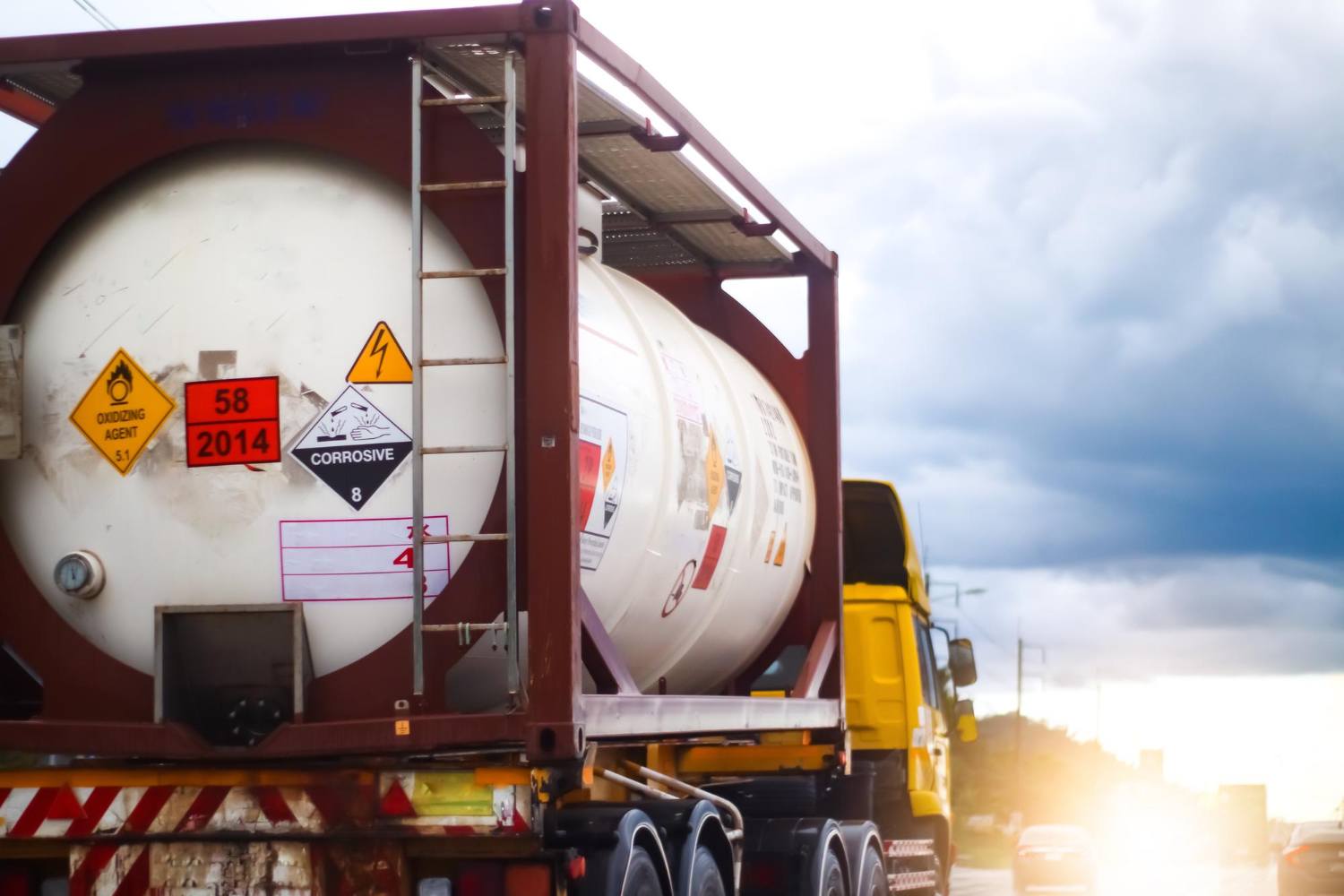
- Certified vehicles — chassis, trailers/containers compliant with ADR standards, featuring special construction, markings and safety equipment
- Qualified drivers — drivers must hold an ADR certificate and be trained for dangerous goods transport
- Documentation — complete and accurate: declarations, waybills, goods description, labels, UN numbers
- Packaging, labelling and loading — materials must be packaged according to ADR rules, properly protected, labelled and secured
- Special routes and restrictions — not all countries or roads allow Class 1 transport; permits, route control, notifications or escort may be required

🔒 Why these requirements matter
The risk level is extremely high — explosion, fire, fragmentation, damage to infrastructure and risk to human life. For this reason, ADR provides no flexibility in Class 1 transport: every step — from packaging to driving — must be controlled and compliant. Violations lead to severe penalties, transport bans, safety risks and environmental hazards.
📊 Main rules and requirements for ADR class 1 transport
| Component / Requirement | What ADR requires |
|---|---|
| Vehicle | Certified, equipped and marked for dangerous goods |
| Driver / personnel | ADR certificate, specialised training, proven competence |
| Documentation | ADR declaration, waybill, UN labels, full shipment data |
| Packaging and loading | ADR-approved packaging, secure fastening, proper marking |
| Route and permits | Approved routes, designated checkpoints, permits where required |
| Markings and labels | Visible ADR/UN hazard signs and class designation |
Transporting ADR Class 1 dangerous goods in Europe is subject to strict rules — from the ADR agreement adopted by almost all European countries to national laws and local restrictions.
To ensure legal, safe and uninterrupted transport, all requirements must be met: equipment, documentation, training, routing and monitoring. Non-compliance creates financial, operational and safety risks, both for people and the environment.
❓ Frequently asked questions (FAQ)
Because the risks — explosion, fire, fragmentation — are significant. ADR requires special safety measures, packaging, vehicles and training.
No. Each state may regulate or prohibit entry of certain dangerous goods into its territory.
A vehicle technically approved under ADR — with compliant containers/trailers, markings, safety equipment, sealing and other mandatory features.
The driver must hold an ADR certificate, understand the hazards, follow procedures related to packaging, marking, loading, routing, documentation and cargo control.
Transport may be stopped, licences revoked, fines imposed; the safety and environmental risks are also substantial.