Refrigerated Transport from Bulgaria to Western Europe: Lanes, Transit Times and What to Expect
Bulgaria sits in an unusual spot on the European freight map: inside the EU, bordering Turkey, and roughly in the middle of the distance between the Balkans and Western Europe’s largest food and pharmaceutical markets. Refrigerated transport from Bulgaria covers everything from a two-day run to Munich to a longer haul into Spain, and the distance alone tells you less than you’d think about what a shipment will actually cost or how long it will take.
This guide sets out the main lanes, realistic transit times, what actually moves those numbers, and why a carrier based in Bulgaria has an advantage that a large Western European operator running the same route does not.
Why Bulgaria is a strategic base for reefer transport
Three things line up here. Bulgaria is a full EU member, so cargo moving to Germany or France crosses no external customs border. It sits directly on the routes connecting Turkey, one of Europe’s largest fresh produce and textile exporters, to the rest of the continent. And it anchors the Balkan corridor, serving Greece, Serbia and Romania as naturally as it serves points further west.
A carrier operating from this base isn’t choosing between the Turkey corridor and the Western European lanes. It runs both, often on the same truck’s round trip.
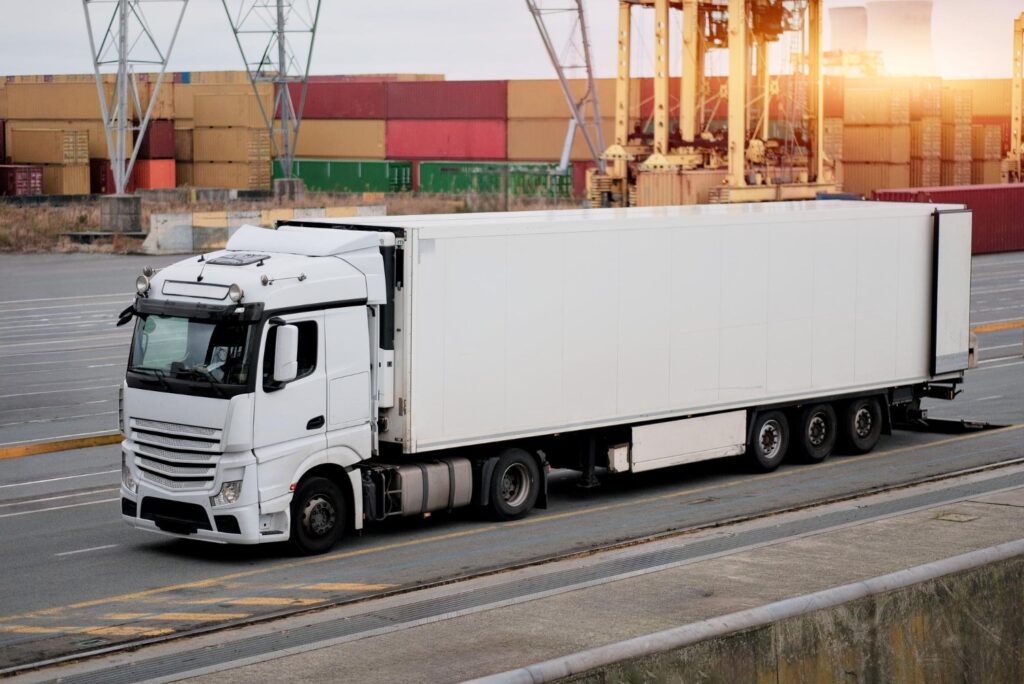
Main lanes and estimated transit times
| Lane | Approx. distance | Estimated transit time | Notes |
|---|---|---|---|
| Sofia → Munich, Germany | ~1,400 km | 2 days | One overnight rest under EU driving-time rules |
| Sofia → Frankfurt, Germany | ~1700 km | 2 to 3 days | Depends on border traffic and rest scheduling |
| Sofia → Milan, Italy | ~1500 km | 2 days | Via Serbia and Slovenia, or via Greek ferry crossing |
| Sofia → Paris, France | ~2700 km | 3 to 4 days | Two overnight rests typical |
| Sofia → Madrid, Spain | ~3000 km | 4 days | Longest common Western European lane |
| Istanbul, Turkey → EU (transit through Bulgaria) | varies by destination | add 0.5 to 1 day at the border | Kapitan Andreevo crossing time depends heavily on season and time of day |
Figures above are estimated from driving distance and standard EU driving-and-rest rules.
What actually changes transit time
Driving and rest rules. EU rules cap a driver’s daily driving time and require regular rest, which is why a distance that looks like a single long day on a map turns into two days on the road. This applies uniformly, so it’s the one variable every carrier faces equally.
Borders. Inside the EU, a border crossing costs minutes, not hours. The Turkey-Bulgaria crossing at Kapitan Andreevo is different: queue times swing from short to genuinely long depending on season, time of day and customs volume, and that variability is the single biggest wildcard on any lane touching Turkey.
Season. The same factors that move price move time. Produce season pulls extra volume onto southern routes, and summer traffic on Western European motorways runs heavier than winter.
Groupage versus dedicated truck. A full truckload runs point to point. Groupage cargo may sit at a consolidation point waiting for the trailer to fill, which adds time a dedicated FTL shipment doesn’t carry. Our cost guide covers this trade-off from the price side.
Why a Bulgaria-based carrier competes with the large operators
A pan-European logistics group can certainly run Sofia to Frankfurt. What it typically can’t do as well is combine that lane with a Turkey transit on the same rotation, price a Balkan-region delivery without treating it as a detour, or move quickly on paperwork for a corridor its head office rarely deals with. Local knowledge of the Kapitan Andreevo crossing, the seasonal produce flows through the region, and the actual state of a given route in winter is not something a rate sheet captures.
Shipping on one of these lanes, or a route not listed here? Contact us with your origin, destination and dates for a firm transit estimate, or see our full refrigerated transport service.
Frequently Asked Questions
Around 2 to 3 days under normal conditions, driven mainly by EU rest requirements rather than distance alone. Border delays or produce-season congestion can extend this.
A full truckload typically runs with the same trailer from origin to destination. Groupage shipments may pass through a consolidation point, which adds handling and potential waiting time compared to a dedicated truck.
Yes, particularly on mountain sections in the Balkans and Central Europe, where snow can slow schedules by hours rather than days in most winters, with occasional longer delays in severe conditions.
Yes, and it’s a common pattern. The load clears Turkish export and EU import formalities at the Bulgarian border, then continues as a standard intra-EU movement for the rest of the route.
Full truckload shipments have no practical minimum beyond filling the trailer economically. Smaller volumes typically move via groupage, consolidated with other shippers’ cargo heading the same direction.
Distance sets the floor for how long a shipment takes. What actually determines the number on your delivery date is EU rest rules, the state of one border crossing, and the season, in that order. A carrier who runs a lane every week knows all three cold; one running it for the first time is estimating alongside you.