
The Cold Chain: What It Is, What Breaking It Costs, and How Carriers Prevent It
Cold chain logistics is a simple idea with an unforgiving execution requirement: a product stays within its required temperature range from the moment it’s produced until the moment it’s used, with no gap. One gap, however brief, and the chain is broken. This guide explains what that means in practice, where breaks actually happen during transport, what they cost when they happen, and the specific practices that prevent them.
What “cold chain” means door to door
The term covers every link between production and end use: cold storage at the manufacturer, the refrigerated vehicle, any transfer point along the route, and storage again at the destination before the product reaches its final user. Transport is one link in that chain, not the whole of it, but it’s often the weakest one, because it’s the stage with the most handoffs, the most variables, and the least direct supervision.
Where breaks actually happen
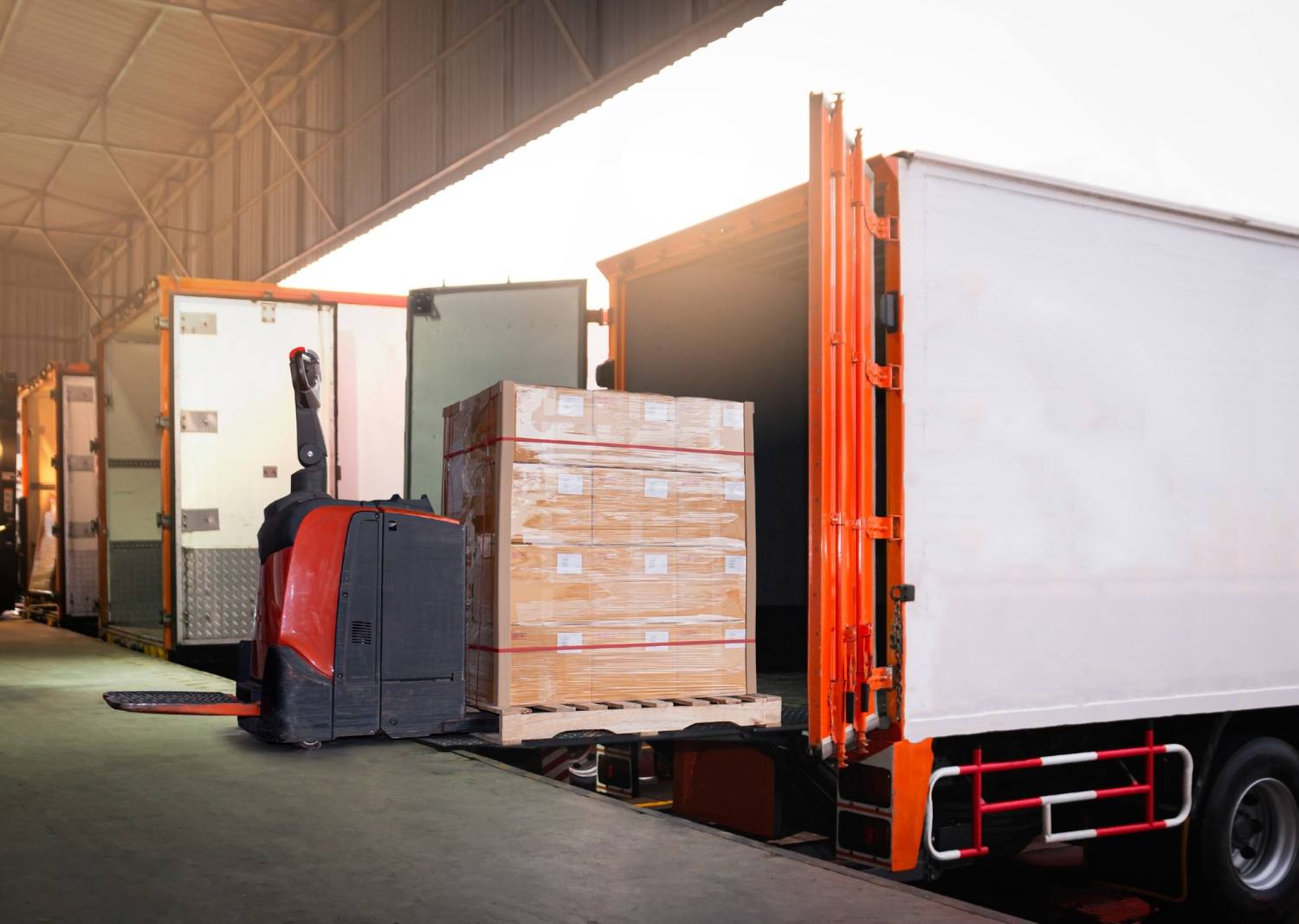
The loading dock. A trailer can hold −20°C perfectly and still receive product that was never properly chilled before loading. The refrigeration unit maintains temperature; it does not rapidly cool warm product down to spec. A cold chain that starts broken stays broken, no matter how good the truck is.
Border waits. Extended time at a crossing, particularly with the engine off or the unit under load in summer heat, is exactly the kind of gap the whole system is designed to prevent. This is one of the practical reasons a carrier who knows a corridor’s typical wait times, and plans around them, matters more than the trailer’s spec sheet.
Multi-stop routes. Every door opening on a multi-drop delivery lets ambient air in. A single stop is a manageable, brief event. A dozen stops on a distribution run is a dozen small gaps that add up, which is why multi-drop cold chain routes are planned differently from single-destination full truckloads.
Unit failure. Mechanical breakdown is the least common cause and the most dramatic. It’s also the easiest to catch quickly, provided the unit is being monitored continuously rather than checked periodically.
What breaking the chain actually costs
The scale varies enormously by product, but it is rarely small. The World Health Organization has estimated that roughly half of vaccines produced globally are wasted, with poor temperature control and cold chain logistics cited as a major contributing factor. For refrigerated vaccines specifically, CDC guidance notes that a single exposure to freezing temperatures can destroy potency outright, and that the damage isn’t always visible: an affected vaccine can look completely normal.
Food carries a different but equally real cost. A spoiled shipment isn’t just the wholesale value of the goods; it’s the replacement shipment, the missed delivery window, and often a damaged relationship with a retail customer who now has an empty shelf. High-value biologics and delicate seafood shipments sit at the sharpest end of this, where a single excursion can represent a serious financial loss on one truckload alone.
Excursion tolerance by product type
Not every product responds to a temperature gap the same way, and the tolerance varies sharply by category.
| Product type | Tolerance for a brief excursion | Consequence of a break |
|---|---|---|
| Quick-frozen food | Up to 3°C above −18°C, briefly | Regulatory limit built in; beyond it, quality and legal compliance are affected |
| Fresh meat, dairy | Essentially none above the regulatory ceiling | Spoilage risk rises immediately; no built-in buffer |
| Refrigerated vaccines | Effectively none for freezing exposure | Potency can be destroyed by a single freeze event, without visible signs |
| Pharmaceuticals under GDP | Defined by the product’s own stability data | Formal deviation assessment; batch may be rejected outright |
Our temperature reference guide covers the specific ranges behind each of these categories in full.
How carriers prevent a break
Pre-cooling before loading. The trailer is brought to target temperature before the doors open, and product loaded at its correct temperature rather than expected to reach it in transit.
Continuous mode where required. For sensitive cargo, the refrigeration unit runs constantly rather than cycling on and off, holding a tighter band than start-stop operation allows.
Continuous monitoring, not spot checks. A temperature logged every few minutes throughout the route, rather than checked at pickup and delivery, catches a developing problem while it’s still fixable and produces the record that proves the chain held, or shows exactly where it didn’t.
Alarms and a written response protocol. A deviation should trigger an immediate alert, not a discovery at unloading. What happens next, who is called, how fast, and what decision gets made, should be a documented procedure, not an improvised one.
Trained drivers. Someone who understands why the doors stay shut at a rest stop, and what pre-cooling actually requires, prevents more breaks than any single piece of equipment.
Beta Tech International runs GDP-qualified, continuously monitored refrigerated transport across Europe, with 24-hour GPS and temperature tracking on every shipment, built around exactly this set of practices.
Moving cargo that can’t afford a gap in the chain? Contact us with the product and route, or see our refrigerated transport service for the full offering.
Frequently Asked Questions
A temperature excursion is any period during which a product sits outside its required temperature range. The consequence depends on the product: some categories tolerate a brief, defined deviation, and others, like refrigerated vaccines, can be permanently affected by a single event.
Yes, particularly on multi-stop routes where the effect accumulates across many short openings, and particularly in hot weather when ambient air entering the trailer works directly against the refrigeration unit.
Liability in international road transport is generally governed by the CMR convention, which sets out carrier responsibility for loss or damage during carriage, subject to specific exceptions. The details depend on the shipment’s terms and the cause of the deviation, which is why continuous temperature records matter as much for liability as for quality.
It depends on the product rather than the temperature band itself. Quick-frozen food has a built-in regulatory tolerance for brief fluctuation that fresh meat and dairy do not, while some frozen biological products have effectively zero tolerance for any deviation at all.
Through a continuous temperature record covering the full route, generated automatically rather than compiled from spot checks. This is the document that satisfies both a quality audit and, if a dispute arises, a liability claim.
A cold chain doesn’t break because of one dramatic failure most of the time. It breaks in small increments: a dock that took twenty extra minutes, a door held open too long, a border queue in July. The prevention is equally unglamorous: pre-cool properly, monitor continuously, and write down what happens when something goes wrong.